
ABM
B2B
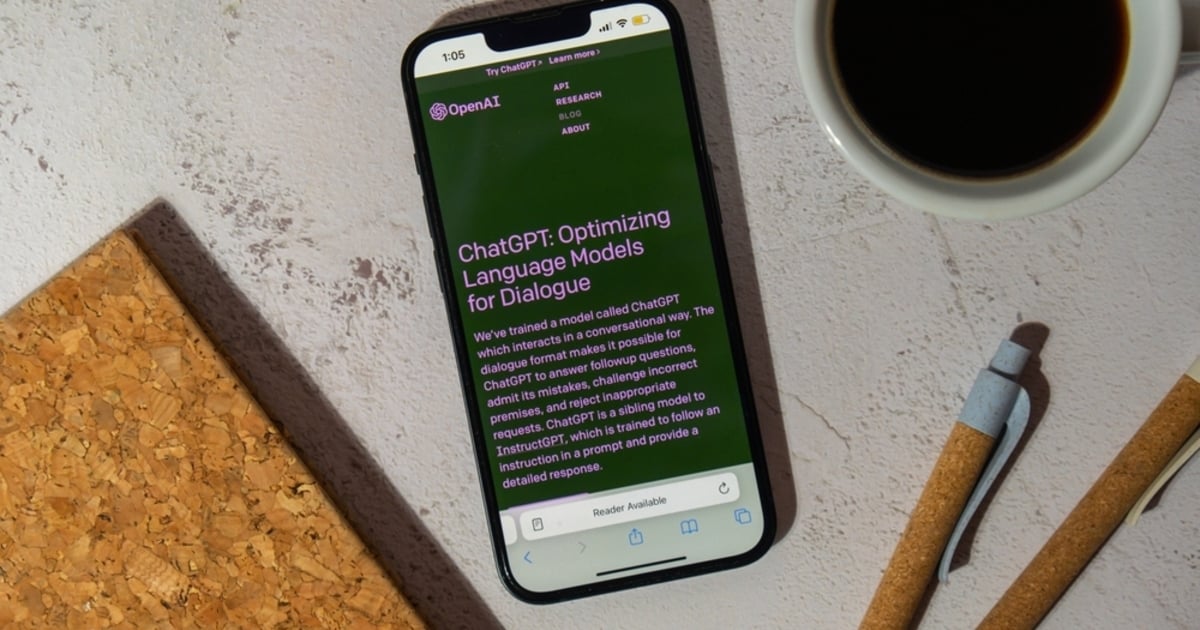

Go ahead. Open ChatGPT right now. Type: "What are the best [your industry] companies for [your service]?"
If your brand isn't in the answer, you have a problem. And it's not a branding problem, it's a revenue problem.
Because in 2026, 89% of B2B buyers have adopted generative AI as a key source of self-guided information throughout their purchasing journey, according to Forrester. Your prospects aren't just Googling anymore. They're asking ChatGPT, Perplexity, and Gemini to build shortlists, compare vendors, and evaluate solutions — before they ever visit your website or talk to your sales team.
And here's the uncomfortable part: AI search engines only cite 2–7 sources per response. That's not 10 blue links. That's 2 to 7 companies mentioned by name. If you're not one of them, you don't exist in the most important new research channel B2B buyers use.
This article explains why it's happening, how AI search works, and exactly what mid-market B2B companies need to do about it — through a discipline called Generative Engine Optimization (GEO).
B2B buyers in 2026 increasingly use AI-powered platforms like ChatGPT, Perplexity, and Google Gemini to research vendors, compare solutions, and build shortlists before engaging with sales. According to Forrester, 89% of B2B buyers now use generative AI as a primary self-guided information source. Gartner predicts that traditional search engine volume will decline 25% by the end of 2026 as AI interfaces absorb this demand.
The numbers tell the story of a structural shift, not a fad.
ChatGPT is now the 4th most visited website globally, with over 900 million weekly active users and more than 1 billion prompts sent daily. It accounts for 77% of all AI referral traffic to websites, according to SE Ranking's 2025 AI traffic study. In the U.S., ChatGPT's share of total internet traffic doubled between January and April 2025 alone.
Perplexity processes an estimated 1.2–1.5 billion search queries per month in 2026, up from 230 million in mid-2024. Its audience skews heavily professional — 80% are college-educated, 30% are senior company leaders, and 65% are high-income professionals, according to WARC.
Google's AI Overviews now appear in more than 50% of Google searches, and when they do, zero-click searches jump to 43% (compared to 34% without an AI Overview). In Google's newer AI Mode, the zero-click rate hits 93%.
Here's what this means for B2B: a study published by BusinessWire found that AI-native platforms like ChatGPT and Perplexity have become the second most common source for qualified B2B leads, accounting for 34%, behind only social media at 46% and ahead of organic search, email marketing, and paid media.
And the visitors who do click through from AI search are dramatically more valuable. Research from Semrush found that AI search traffic converts at 14.2%, compared to Google's 2.8% — making each AI search visitor worth roughly 4.4x as much as a traditional organic visitor.
The B2B buyer journey has fundamentally changed. If your marketing-sales alignment strategy doesn't account for where buyers actually research in 2026, you're building a pipeline on a foundation that's eroding underneath you.
Generative Engine Optimization (GEO) is the practice of optimizing content so it is cited, referenced, and recommended by AI-powered search engines such as ChatGPT, Perplexity, Google Gemini, and Google AI Overviews. The term was introduced by Princeton researchers in 2023, and by 2026, GEO had become an essential discipline for B2B brands seeking visibility in AI-driven search.
Unlike traditional SEO, which focuses on ranking in a list of links, GEO focuses on being the answer — the source that an AI system selects, cites, and synthesizes when a buyer asks a question.
Here's the simplest way to understand the difference:
SEO helps your page appear in Google's search results. The buyer sees your link and decides whether to click.
GEO gets your brand cited inside the AI-generated answer. The buyer sees your name, your data, and your expertise — integrated into the answer itself. In many cases, they never need to click at all. Your brand becomes the recommendation.
AEO (Answer Engine Optimization) is often used interchangeably with GEO. Both terms describe the same discipline, optimizing content for AI-generated responses, though AEO tends to emphasize featured snippets and voice search, while GEO specifically targets large language model (LLM) outputs.
The GEO market was $886 million in 2024 and is projected to reach $7.3 billion by 2031, an 8x increase with a 34% compound annual growth rate, making it one of the fastest-growing segments in digital marketing.
At Momo85, GEO is not an add-on. It's core to how we build B2B content strategies. Every piece of content we produce is designed to rank on Google AND get cited by AI, because in 2026, you need both.
If you've tested your brand in ChatGPT or Perplexity and found yourself absent, you're not alone. Most mid-market B2B companies are invisible in AI search. The reason comes down to three structural gaps.
Traditional SEO revolves around domain authority: a metric built primarily through backlinks. AI search engines care more about entity authority, whether they recognize your brand as a legitimate, expert entity within a specific topic.
Entity authority is built through consistent mentions across authoritative third-party publications, structured data on your website, a clear brand presence across the web (LinkedIn, industry directories, review sites), and content that demonstrates deep, specific expertise.
Most mid-market companies have domain authority from years of SEO work, but almost zero entity authority in the AI sense. They've never been mentioned by name in the kinds of sources that LLMs train on and retrieve from. The brand exists on its own website. It doesn't exist in the broader knowledge graph that AI systems reference.
LLMs cite 2–7 domains per response on average, far fewer than Google's 10 blue links. This means the competition for visibility in AI search is dramatically more concentrated. And the data shows who wins: business and service sites account for 50% of all ChatGPT citations, followed by news/media sites (9.5%), blogs (8.3%), and e-commerce (7.6%), according to Semrush.
But here's the critical insight: 89% of citations differ depending on whether you ask ChatGPT vs. Perplexity. The platforms pull from different sources, weigh different signals, and generate different recommendations. A GEO strategy needs to target multiple AI platforms, not just one.
AI engines don't read content the way humans do. They parse it for clear, direct answers to specific questions. If your content is buried under vague introductions, walls of text, or keyword-stuffed paragraphs, LLMs skip it in favor of content that gets to the point.
Research from Princeton found that the top GEO optimization methods (citing sources, adding statistics, and including expert quotes) can improve AI visibility by 30–40% compared to unoptimized content. Structure isn't optional. It's the mechanism by which AI decides whether your content is citation-worthy.
AI search engines use a process called Retrieval-Augmented Generation (RAG) to produce answers. Understanding RAG — even at a basic level — is essential for any B2B marketer who wants to appear in AI results.
Here's how it works in four steps:
1. Query interpretation. The AI interprets the user's question, identifying intent, key concepts, and sub-questions. A query like "best B2B demand generation agencies for mid-market SaaS" gets parsed into components: B2B, demand generation, agency, mid-market, SaaS.
2. Source retrieval. The engine searches its training data and/or live web results to identify relevant sources. It prioritizes high-authority, recent, and topically relevant content. This is where freshness matters enormously — research from Seer Interactive found that 85% of AI Overview citations were published within the last two years, and 50% of Perplexity's citations come from content published in 2025 alone.
3. Source evaluation. Sources are evaluated for authority, accuracy, and relevance. Content with citations, data points, and expert credentials scores higher. The AI is essentially asking: "Is this source trustworthy enough that I can confidently cite it in my answer?"
4. Synthesis and citation. The AI synthesizes information from multiple sources into a coherent response, selecting the most relevant details and citing sources for verification. Your brand either makes this cut, or it doesn't.
The key difference from Google: in SEO, you compete for a click from a list. In GEO, you compete for a mention inside the answer itself. The real estate is smaller, the bar is higher, and the reward is significantly greater — because an AI citation is essentially a recommendation.
Want to know where you stand? Momo85's Pipeline Diagnostic now includes an AI visibility audit — we test your brand across ChatGPT, Perplexity, and Gemini for your highest-value queries and show you exactly where you're visible, where you're invisible, and what it's costing you.
Getting cited by AI search engines isn't a mystery; it's a system. Here's the five-step framework Momo85 uses in our GEO + SEO Sprint engagements.
Before optimizing, you need a baseline. Test your brand against your highest-value queries across all major AI platforms.
Open ChatGPT, Perplexity, and Gemini. Ask the exact questions your buyers ask: "What are the best [category] agencies for [industry]?" "How do I solve [problem your product addresses]?" "What companies offer [your service]?"
Document every response. Note which competitors appear. Note where you don't. This is your AI visibility gap — and for most mid-market B2B companies, it's enormous.
Entity authority is built across four surfaces: your website, third-party publications, industry directories, and social platforms (especially LinkedIn and Reddit, which LLMs frequently crawl).
On your website: add comprehensive author bios with credentials, define your key terms explicitly (don't assume the AI knows what you do), create detailed service pages and comparison pages, and implement FAQ schema on your highest-traffic pages.
Off your website: get your founders quoted in 3–5 industry publications, earn mentions in relevant directories and review sites, publish original research that others will cite, and maintain an active presence on platforms LLMs monitor — LinkedIn, Reddit, and Quora.
Princeton's GEO research identified the top three content optimization tactics: citing sources (+40% visibility), adding statistics (+37% visibility), and including expert quotes (+30% visibility).
Every piece of content you publish should include direct question-answer pairs at the start of key sections (the question as a header, followed by a concise 2–3 sentence answer before elaborating), specific data points with clear attribution, expert quotes with credentials, and structured definition patterns (e.g., "[Term] is [clear definition]").
Momo85's content strategy approach builds all of this into every article from the brief stage — not as an afterthought, but as the core structural framework.
AI models don't just pull from your website. They synthesize from across the web. The more authoritative third-party sources mention your brand in the context of your expertise, the more likely you are to be cited.
Tactics that work: guest articles in industry publications, being a source for journalists (HARO, Quoted, editorial relationships), publishing original data that others reference, podcast appearances (transcripts get indexed), and contributing expert commentary on LinkedIn and Reddit, where LLMs crawl.
GEO is not a one-time project. AI models regularly retrain on new content, which means your visibility is a moving target.
Establish a monthly cadence: re-run the same AI queries, track which brands appear, monitor changes, and adjust. Tools like Profound, Superlines, and SE Ranking now offer AI visibility tracking specifically for GEO measurement. The key metrics are citation frequency, brand visibility score, and AI share of voice — not traditional clicks and CTR, which have limited meaning in AI-generated responses.
Yes. Unequivocally, yes. Here's why.
SEO remains the foundation of GEO. Research shows that 99% of AI Overview citations come from the organic top 10 results, and 87% of ChatGPT citations correspond to top Bing results. You need to rank well in traditional search to even be in the running for an AI citation.
But SEO alone is no longer sufficient. With 25% of traditional search queries projected to disappear by end of 2026 (Gartner) and 60% of searches already ending without a click, a Google-only strategy is a shrinking asset.
The mid-market opportunity here is massive. Enterprise companies are starting to invest in GEO through expensive consultancies. Small businesses don't have the content infrastructure to compete. But mid-market B2B companies ($2M–$30M) with solid content foundations can move fast — faster than enterprise — and claim AI visibility in niche B2B categories before the space gets crowded.
This is exactly where Momo85 positions its GEO + SEO Sprint. We don't separate search optimization from AI optimization. We build both into a single content engine — so every article you publish ranks on Google AND gets your brand cited in ChatGPT, Perplexity, and Gemini simultaneously.
Because in 2026, the question isn't SEO or GEO. It's SEO and GEO — or invisibility.
Generative Engine Optimization (GEO) is the practice of optimizing content so it is cited, referenced, and recommended by AI-powered search engines such as ChatGPT, Perplexity, and Google Gemini. Unlike traditional SEO, which focuses on ranking in a list of links, GEO focuses on earning a place inside the AI-generated answer itself. The term was introduced by Princeton researchers in 2023, and the GEO market is projected to grow from $886 million (2024) to $7.3 billion by 2031.
SEO optimizes content to rank in traditional search engine results pages (SERPs) — the list of blue links on Google. GEO optimizes content for AI engines to cite and synthesize, generating conversational answers. SEO relies primarily on domain authority built through backlinks, while GEO relies on entity authority built through structured content, third-party mentions, and citation-worthy data. In 2026, B2B brands need both — SEO provides the ranking foundation, and GEO ensures visibility in AI-generated responses.
The simplest way to audit your AI visibility is to open ChatGPT, Perplexity, and Google Gemini and type the exact questions your buyers ask — such as "best [category] companies for [industry]" or "what companies offer [your service]." Document which brands appear and where you're absent. For a more comprehensive audit, Momo85's Pipeline Diagnostic includes an AI visibility assessment that tests your brand across all major AI platforms for your highest-value queries.
Mid-market B2B companies ($2M–$30M) face a structural disadvantage in AI search. Enterprise competitors have larger content libraries, more third-party citations, and dedicated GEO budgets. Smaller competitors may not matter. But mid-market companies — often with limited marketing teams and no AI search strategy — risk being completely absent from the 2–7 sources AI engines cite per response. Since Forrester reports that 89% of B2B buyers now use AI search in their purchasing journey, invisibility in AI search directly translates into pipeline loss.
GEO is not an overnight fix. Most B2B companies should plan for 3–6 months of sustained effort to achieve measurable results with AI citations. However, some quick wins are possible within 30–60 days — particularly around structuring existing content for AI extraction (adding Q&A pairs, statistics, and citations) and building entity authority through LinkedIn and third-party publications. Momo85's GEO + SEO Sprint is designed to deliver the first measurable visibility improvements within 90 days.
Every day your brand is invisible in AI search is a day your competitors are getting recommended instead. In 2026, B2B buyers build shortlists in ChatGPT before they ever visit your website. If you're not in that answer, you're not on the list.
Ready to see where you stand? Book a GEO + SEO Sprint with Momo85. We'll audit your AI visibility, identify the gaps, and build a system that gets your brand cited where your buyers are actually looking. Not just on Google. Everywhere.